
Affordable Website Design in Decorah, IA: Bakery Order Guide
Plan affordable website design in Decorah, Iowa, for a small bakery. Clarify custom orders, collection, product information, SEO and enquiry follow-up.
The quick read
Key questions at a glance
Does a small bakery need a full online store?
Not automatically. If orders need discussion, start with clear product information and a structured enquiry route. Add checkout only when products, availability, fulfilment and the receiving process can support a confirmed transaction.
What should a custom cake enquiry form ask?
Ask for the information the bakery needs to review the request, such as the event date, collection preference and broad product requirements. State that submitting a request does not confirm availability or an order.
Can a bakery website promise allergen suitability?
Publish only information the business has verified and approved for the actual product and process. Do not let a template or AI tool invent ingredient, allergen or dietary claims. Refer uncertain questions to the bakery's appropriate process.
What should an affordable Decorah bakery website do?
For a small bakery in Decorah, Iowa, an affordable website should make the next customer decision easier. A person may need to understand the available products, ask about a custom order or check collection arrangements. Decide which of those tasks your operation can support before commissioning an elaborate store.
A custom cake gallery and a confirmed ordering system are not the same thing. The website should show what the bakery actually offers while explaining when a request needs review. Good design supports that distinction rather than disguise it behind a button that promises more than the business can deliver.
This guide is a website-planning framework, not food-safety advice, a local demand study or a bakery case study. No Decorah client, agency office, price or sales outcome is asserted. Product facts and customer terms must come from the business's approved sources.
Ground the local information in real arrangements
The Decorah Area Chamber's downtown retail and restaurant directory is a local reference for businesses and visitors. Its existence does not establish membership, endorsement or commercial demand for a particular bakery.
Describe your actual collection point and hours. If the bakery operates by arrangement rather than as a walk-in shop, make that clear. An image of a busy storefront should not imply a public counter that does not exist.
Use Decorah, Iowa where it resolves geography, then concentrate on useful information. Explain whether customers collect, whether delivery is offered and which arrangements require confirmation. Do not invent a wider service area to support additional location pages.
Keep the web provider's identity separate from the bakery's location. Brands Essential can discuss remote website work; this article does not claim an office in the city or a relationship with the chamber.
Separate everyday products from custom commissions
List the categories the business genuinely sells and how each is ordered. A readily specified product may follow a different process from a custom celebration cake. The navigation should reflect that difference when it matters to the customer.
Do not force all enquiries into a shop checkout merely because a website theme includes one. If design, feasibility or availability needs review, use a request process that accurately explains the next step.
Equally, do not require a lengthy consultation for a product that the bakery has already standardised and can fulfil through a reliable ordering arrangement. Match the interface to the actual operation rather than make every customer follow the same path.
Create a simple product-process inventory. For each category, record the information shown publicly, the information gathered from a customer and the person who confirms acceptance. That inventory becomes a practical design brief.
Build a homepage that explains the offer quickly
The opening should identify the bakery's focus, location and primary next action. Use real approved product images where possible. Avoid a large decorative introduction that leaves visitors uncertain whether the business accepts custom requests.
Give each important product route a clear label. Someone seeking a custom cake should understand where to begin without opening every gallery. Someone checking collection details should not have to submit a form.
Add an honest explanation of the working process. If orders require approval, say so near the action. If availability is confirmed later, avoid wording that implies the date is reserved immediately.
Use the homepage to orient the visitor, not duplicate every product description. Link to the appropriate details and keep the first screen readable on a phone. Our homepage conversion checklist can help assess clarity.
Curate galleries around customer choices
Organise approved images into categories that help a customer understand the offering. A gallery should show relevant style and scope, not become an unstructured archive of everything the business has ever made.
Provide context where it matters. Explain whether an image shows a previous custom commission, a current standard product or a design reference. A visitor should not have to guess which details can be reproduced.
Do not imply that every photographed product is currently available. Use the bakery's approved qualifications and explain that custom requests require confirmation where appropriate. Avoid making a gallery caption into an unapproved product promise.
Review image permissions and backgrounds. Keep customer names, event information and other personal details out of public examples unless the intended use is properly authorised. Generated editorial imagery must not be presented as evidence of the bakery's actual work.
Write product information the team can stand behind
Have the bakery approve descriptions, specifications and any dietary information. The website provider should organise facts, not become the source of product knowledge. If a detail has not been confirmed, resolve it or leave it out.
Be particularly careful with ingredient, allergen and suitability statements. Do not copy claims from a visually similar product or let an AI tool infer them from a photograph. Use the business's appropriate review process for food-related information.
Separate descriptive language from an operational commitment. A photograph may convey style, but the business must confirm what a particular order can include. Avoid universal statements that overlook variations between products or processes.
Assign a content owner who can update facts when an offering changes. A product page should not remain published indefinitely because the person who built the site no longer knows who can approve a correction.
Make the custom-order form useful and bounded
Begin by asking the bakery what it needs to review a request. That might include the desired date, broad product type, collection preference and an appropriate contact channel. Do not add fields simply to make the form appear sophisticated.
Explain the request's status before submission. A clear acknowledgement should state what has happened and what remains to be confirmed. Do not treat a received form as an accepted order or reserved production slot.
If reference-image uploads are useful, scope how they are handled and who reviews them. Explain that a reference supports a discussion rather than promises an exact reproduction or establishes rights to a design.
Keep the first conversation proportionate. Avoid collecting payment details or unnecessary sensitive information through a general enquiry form. Payment and confirmed-order processes require their own approved arrangements.
Distinguish deadlines, availability and response expectations
Use only lead-time or availability information the bakery has approved. This guide supplies no universal production times. A web designer should not invent an ordering deadline to make the page look complete.
Explain how customers learn whether their preferred date is available. If staff must review the request, the website should reflect that. Do not display an apparent live calendar unless the underlying information can be maintained reliably.
Review the wording around late requests. It should communicate the real business process without encouraging customers to assume an exception will be granted. Give a clear contact route if the business wants to discuss uncertainty.
Do not publish a response-time promise unless the team can support it. An accurate acknowledgement with an approved next step is more useful than an impressive but unreliable assurance.
Clarify collection and delivery before adding automation
State the actual collection process and the information confirmed with an order. Keep the location, contact route and relevant instructions accurate. Do not assume a map link alone explains how a customer receives a custom product.
If delivery is offered, define the information needed to discuss it and where the business confirms the arrangement. Do not advertise an invented radius, fee or guaranteed time. Use current approved terms.
Separate a collection request from a confirmed slot if staff still need to review capacity. The distinction should be visible in the button, form and acknowledgement, not hidden in a document after submission.
Test the handoff from the customer's perspective and the bakery's. Confirm who receives the request, who contacts the customer and where the agreed details are recorded. Automation should support that process rather than leave responsibility unclear.
Decide when online checkout is justified
Checkout is useful only when the business can honour what it sells through the chosen flow. Before adding it, define the product, availability, payment arrangement, fulfilment and handling of changes or problems.
Distinguish a deposit from a full purchase and from a general enquiry. The commercial wording and provider configuration should match the bakery's approved terms. Have appropriate advisers review legal or payment questions rather than improvise them in page copy.
Ask the web supplier to demonstrate the complete transaction in an appropriate test arrangement. Include acknowledgement, staff receipt and the process for resolving a failed or incomplete action.
If the bakery is not ready for that operating commitment, a clear reviewed-request process can be a sensible first release. Explain what would need to change before checkout is added later.
Design for the person checking details on a phone
Use readable product descriptions, practical contact information and a navigation structure that remains understandable on a small screen. Do not hide essential ordering qualifications behind hover effects or decorative image overlays.
Check the gallery with real images. Compress display copies, preserve originals and avoid making the page load an entire archive before the first useful information appears. Review image quality after compression.
Test forms with long product descriptions and realistic customer wording. Errors should explain what to correct. Confirm that a person can use the form with a keyboard and see where focus is moving.
Scope specialist accessibility review separately where needed. A basic design checklist is not a universal certification. The aim of this practical test is to identify barriers in the actual journey being delivered.
Use SEO to answer genuine bakery questions
Create pages around meaningful product or process differences. Explain how custom requests work, what the bakery offers and where to find verified collection information. Avoid a page for every minor keyword variation.
Use accurate local information across business-controlled channels. Google's business representation guidance is relevant when maintaining real-world identity; do not invent a location for search coverage.
Link from a gallery to the associated request process and relevant product explanation. These links should help the visitor make a decision, not send them through an unrelated chain of articles.
This city was not selected using verified search-volume or competition data. Evaluate actual queries and enquiries when reliable reporting is available rather than describe the article as a guaranteed local ranking opportunity.
Approach AEO with direct, qualified answers
Write the answer to an important question first, then explain its limits. A useful answer about custom ordering should make the request process clearer, not repeat a promotional statement about quality.
Google's AI search documentation does not offer a shortcut to guaranteed inclusion. Avoid a proposal that promises AI placement merely because the website includes FAQs.
Use the bakery's approved facts throughout visible text and any structured data. Do not add details to markup that the business would not publish plainly on the page. The information should remain consistent when the offering changes.
For related practical guidance, see our SEO and AEO launch checklist. Apply it to the actual product journey rather than use it to justify an oversized content programme.
Scope an affordable build in sensible phases
A first release can focus on the product overview, curated gallery, custom-request process and accurate practical information. Make that route complete before adding a complicated catalogue or customer account system.
Ask the quote to separate writing, image preparation, development, form configuration, testing and training. List third-party charges and ongoing support separately. Our website cost planner provides a comparison framework.
Identify what you can supply: approved product information, actual photographs, business details and staff process. If help is required to organise the material, include it explicitly instead of leaving it outside the quoted work.
Record future features with the reason they are deferred. A phased plan should not require replacing the entire first release merely because a foreseeable product category is added. Ask the provider to explain those dependencies.
Test enquiry quality and the receiving workflow
Use an approved non-sensitive test request. Confirm that the bakery can read the information, identify the requested category and understand which details still need discussion. Check where the message arrives and who owns the next action.
Test a request for an unavailable date or unsupported product. The interface should not automatically imply acceptance. Review whether customers can understand the limitation before investing time in a detailed submission.
Check a failed upload or missing required field if those functions are included. A form that works only on the simplest successful path is not fully evaluated. Document corrections before launch.
Repeat the test on the published domain. The preview environment does not establish that production email, permissions and connected services are working. Include the receiving team in sign-off.
Build ongoing marketing from real work
Use approved product stories, process explanations and genuine customer questions as source material. Publish only work the business can show and claims it can substantiate. Avoid invented testimonials or sales results.
AI can help draft an outline from approved notes, but it should not create ingredient facts, manufacture customer feedback or imply the image of a fictional cake is a real commission.
Repurpose a useful explanation for relevant channels while keeping the website as a maintained reference. Link social posts to the appropriate product or request page rather than always to a generic homepage.
Review performance in stages: relevant visits, product enquiries, confirmed orders and operational outcomes. A gallery click does not establish a sale. Keep reporting honest about the data available.
Keep a product change sheet beside the website
Record each change to an offered product, its approved description and any affected ordering instructions. Identify the pages and external systems that need updating. A social announcement does not automatically correct an old gallery caption or form option.
Before publishing, have the person responsible for the product check the revised information. Then verify the customer route using the actual page. This modest change-control process helps the bakery maintain consistent expectations without buying a complicated software system simply to organise occasional edits.
How Brands Essential can help a Decorah bakery
Bring the current website, product categories, custom-order process and budget limit. Explain who approves product facts, who handles requests and which material is ready for the first release.
Brands Essential can discuss a website and ongoing marketing plan around those needs. Ask for explicit deliverables, operational boundaries and support responsibilities rather than a high headline figure without context.
Contact Brands Essential about your Decorah bakery website. A useful starting conversation is about the customer decision and staff process you need to improve.
This is a remote service discussion, not a claim of a Decorah office, chamber relationship or existing bakery client. Availability, price and delivery timing require an agreed brief and proposal.
Sources and editorial notes
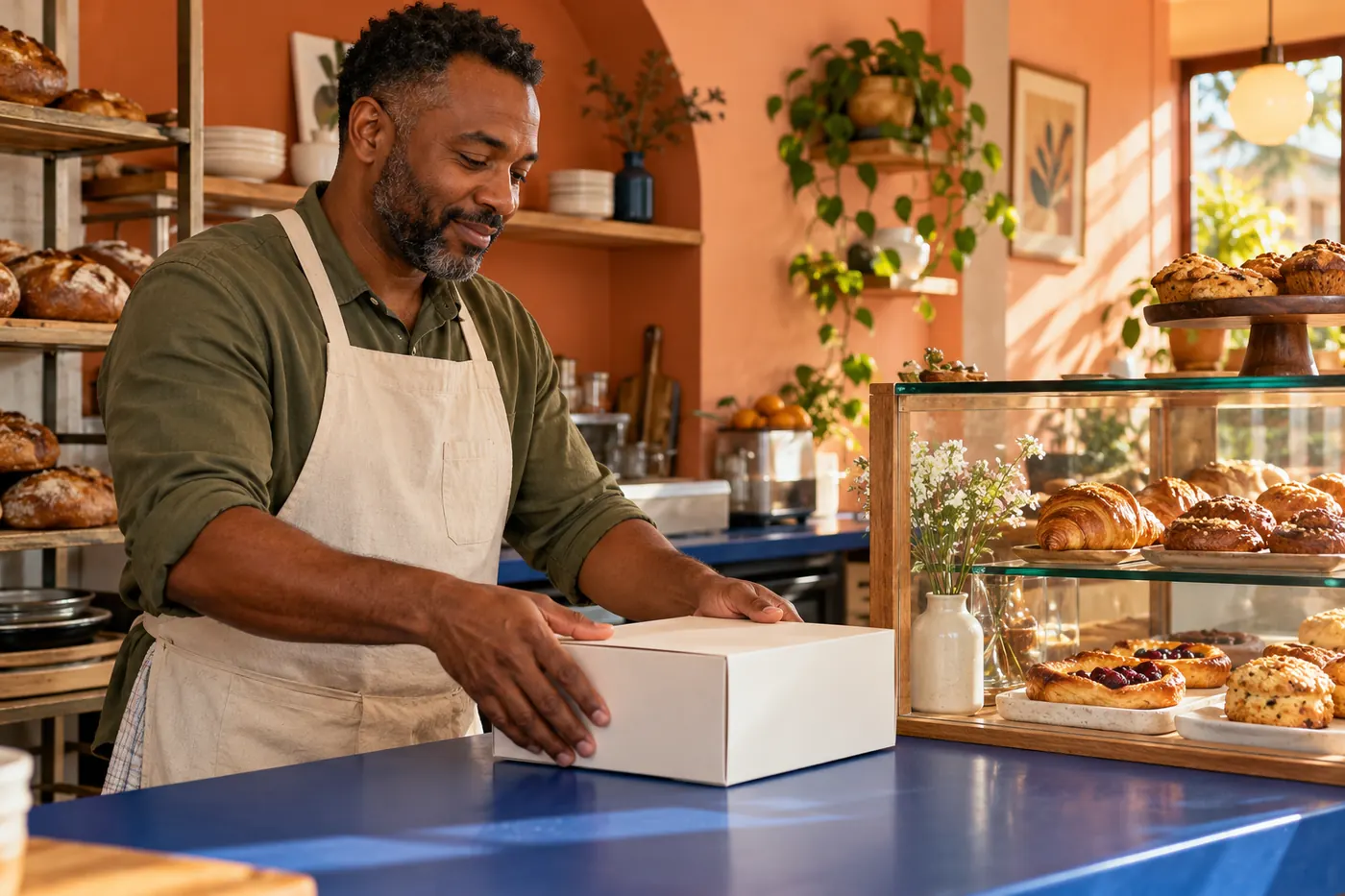
Reviewed October 28, 2026. This is an editorial website-planning guide, not food-safety, legal or pricing advice. The image is an AI-generated illustration and no client results are claimed.
- Decorah Area Chamber of Commerce: downtown retail and restaurant directory, checked on the review date.
- Google Business Profile: guidelines for representing your business.
- Google Search Central: AI features and your website.
Frequently asked questions
Questions, answered
Does a small bakery need a full online store?
Not automatically. If orders need discussion, start with clear product information and a structured enquiry route. Add checkout only when products, availability, fulfilment and the receiving process can support a confirmed transaction.
What should a custom cake enquiry form ask?
Ask for the information the bakery needs to review the request, such as the event date, collection preference and broad product requirements. State that submitting a request does not confirm availability or an order.
Can a bakery website promise allergen suitability?
Publish only information the business has verified and approved for the actual product and process. Do not let a template or AI tool invent ingredient, allergen or dietary claims. Refer uncertain questions to the bakery's appropriate process.
How can a Decorah bakery control website costs?
Choose a complete first-release journey, supply approved product information and defer features that are not operationally ready. Compare page structure, content work, forms, subscriptions and support separately.
How should bakery galleries support SEO and AEO?
Explain the product category, ordering process and service boundaries in useful text beside approved images. Answer genuine questions clearly without promising search rankings or AI recommendations.
Is Brands Essential a Decorah bakery or local office?
No such relationship is claimed by this guide. It is a remote website-planning resource for businesses serving Decorah, Iowa. Contact Brands Essential to discuss your actual scope and budget.
Build a website around your customers and budget.
Tell Brands Essential what you need, what is already working and the budget you can sustain. Agree a useful first phase and the responsibilities before adding more.
Keep exploring
More Website Development ↗
Core Web Vitals for Small Businesses: Diagnose Before You Fix
Use PageSpeed Insights and browser traces to diagnose loading delays, slow interactions and layout shifts on the pages that matter.
Read insight
Website Accessibility Checklist for Small Businesses
Check keyboard navigation, focus, contrast, zoom, forms and media on the pages customers use to contact, book or buy.
Read insight
Website Redesign Cost: How to Compare Small-Business Quotes
Build an apples-to-apples website redesign budget covering scope, content, integrations, migration, testing and support.
Read insight