
Affordable Website Design in Albert Lea, MN: Pet Groomer Guide
Plan affordable website design in Albert Lea, Minnesota, for pet groomers. Clarify services, new-client requests, booking steps, local SEO and useful FAQs.
The quick read
Start with the essential answers.
What should a pet grooming website explain first?+
State the services and pets you accept, where the business operates and how a new customer requests an appointment. Explain any review needed before a booking is confirmed.
Should new and returning clients use the same booking route?+
They can, but separate routes are useful when new clients require additional review. The website should make the distinction obvious and avoid suggesting every request is instantly accepted.
Can a grooming website publish fixed prices?+
Yes, when the service and conditions are clearly defined. If price depends on an assessment, explain the factors and when a quote is confirmed rather than implying a universal rate.
What should an affordable pet grooming website achieve?
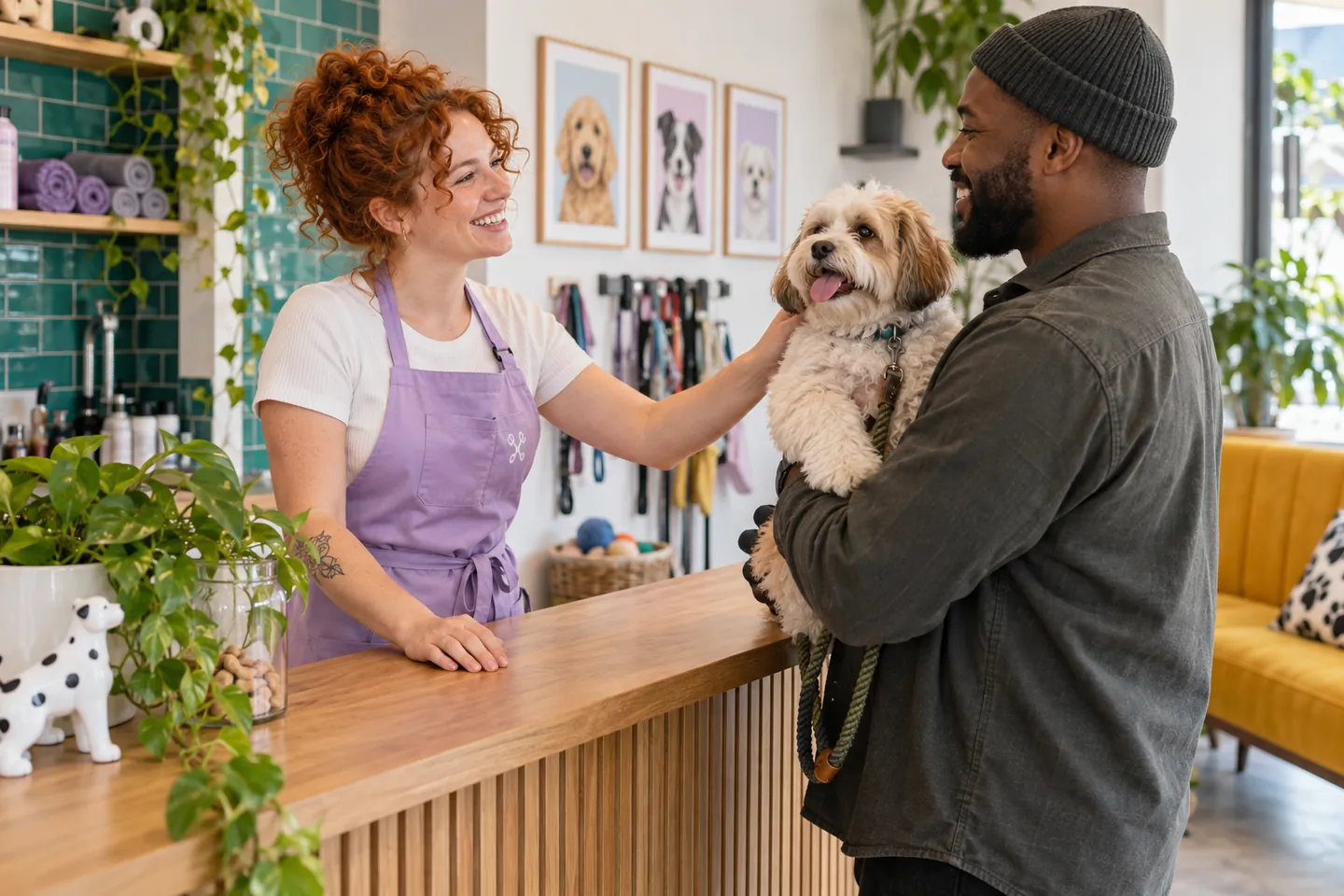
An affordable pet grooming website should help an owner understand whether the service is suitable and how to request the first appointment. For an Albert Lea, Minnesota business, a friendly visual style matters, but the practical information matters just as much: what is offered, which pets are accepted, where to go and when a booking is actually confirmed.
A small business does not need a custom booking platform simply to look professional. A clear service menu and an honest new-client request process can be a strong starting point. The right website reduces uncertainty for the owner and avoids creating promises the groomer must correct later.
This September 2026 guide uses a fictional grooming studio to explain website planning. It is not veterinary advice, a client success story or a claim of a Brands Essential office in Albert Lea. Eligibility, preparation and care policies must be supplied and approved by the actual business and appropriate professionals where relevant.
Establish the real Albert Lea location and service model
The Albert Lea-Freeborn County Chamber of Commerce provides a local business directory and community resources. It is a useful reference for the business environment, not evidence of a particular grooming company's membership, capacity or service area.
Make your own model explicit. A fixed studio, a mobile service and a business operating by appointment have different practical questions to answer. The website should not imply walk-in access or travel coverage unless those options are genuinely offered.
Use the correct address and approved arrival information. If customers need to use a particular entrance or arrange their visit in advance, explain that clearly. A map pin alone may not provide enough information for someone arriving for the first time.
If you serve customers from outside Albert Lea, describe that relationship naturally. Do not invent additional locations to appear in more searches. Accurate practical details are more helpful than a long list of place names with no explanation of how the service works.
Write the homepage for a first-time owner
Imagine a visitor who has never used your business. They need to identify the offer, see whether it broadly fits their needs and understand how to ask about an appointment. Put those answers before a long brand story or a large image sequence.
A clear introduction can name the service, location and usual next step. Follow it with a short service overview, relevant trust information and practical questions. Keep the primary action visible without placing several competing booking buttons in the same area.
Avoid vague claims such as “the perfect experience for every pet.” Individual suitability may need discussion. A welcoming tone can still be precise about the review process and limits of the offer.
Use real photographs of the studio and team when permission is available. The website should prepare the owner for the environment they will encounter. If imagery is illustrative, do not present it as the actual premises or a customer visit.
Separate new-client requests from repeat appointments when needed
A returning customer may already have an established service arrangement, while a new owner may need to discuss suitability first. If those workflows differ, make the distinction easy to see. Do not make both audiences guess which button applies.
For the fictional studio, a new-client form collects a small amount of context for review. Returning customers are directed to the studio's existing appointment route. The website explains that a new request does not confirm acceptance or reserve a time.
This distinction can reduce unnecessary administration. Staff receive the information needed for a first conversation, and existing customers are not repeatedly asked questions already covered by the established process.
If one booking system handles both groups reliably, separate pages may not be necessary. The important point is the behavior, not the number of screens. Test the journey with both customer types and check that neither is given an inaccurate confirmation.
Make the service menu understandable without specialist language
Describe what each service includes in terms a customer can understand. If a package name is creative, pair it with a plain explanation. Owners should not have to call simply to decode the menu.
State the categories of pets or services the business accepts, using approved wording. Avoid implying that all breeds, sizes or circumstances can be accommodated if the groomer reviews them individually. A short qualification near the service description can prevent a mistaken assumption.
Distinguish optional additions from the core service. A photograph or package name can imply inclusions that are not actually offered. Write the important details in text and keep the booking tool consistent with the website description.
Do not turn the service menu into general health guidance. The website can explain how the business handles questions and when an owner should contact the team, while leaving clinical advice to an appropriate professional. Clear service communication does not require making medical claims.
Explain pricing in a way the business can honor
If a service has a stable price under defined conditions, show those conditions with the figure. If the price depends on a review, explain when it is confirmed and what information the business needs. Transparency does not require pretending every appointment is identical.
Avoid a low “from” price without context. A visitor may reasonably interpret the headline as the likely total. If the normal service involves variables, explain them in the business's approved language rather than hiding them in a distant note.
Keep prices consistent between the website, booking service and staff messages. Assign someone to update all affected locations when the offer changes. A mismatch at booking can undermine the confidence created by a polished page.
For the website project, compare the whole commitment: setup, writing, image preparation, booking integration and ongoing support. An inexpensive site that requires repeated paid edits for basic service changes may not remain affordable for a small studio.
Keep first-contact information proportionate
Ask for what the team needs to decide the next step. That may include the owner's contact details, the pet type, broad size information and the service requested. Provide a short optional field for anything the owner would like to discuss.
Do not ask for extensive records simply because the form builder permits uploads. If the studio needs further documents, use its approved process at the appropriate stage. Explain what is needed and why rather than collecting information without a clear purpose.
Let people indicate uncertainty. A new customer may not know which service name applies. An “I would like guidance” option can be more useful than forcing an inaccurate selection that staff must correct later.
Avoid using the form to make an automated suitability judgment unless the business has deliberately designed and reviewed that process. For a small first website, a human-reviewed inquiry is often clearer and easier to operate responsibly.
Publish preparation information only after approval
Owners may want to know what to bring or how the first visit is arranged. Provide the business's actual instructions in a clear, accessible place. Do not borrow another studio's policy or generate generic advice and assume it applies.
Distinguish administrative preparation from care guidance. The website may tell a customer to confirm an appointment or bring information requested by the team. It should not improvise medical or behavioral recommendations to fill an FAQ section.
Keep the instructions aligned with confirmation messages. If the website says one thing and the booking email says another, the owner must decide which to trust. Review these touchpoints together when the process changes.
Use a short checklist where it helps, but do not hide essential requirements inside a downloadable file alone. Important information should be readable on the page and easy to revisit from a phone before the appointment.
Choose booking software around the actual workflow
Begin by describing what happens today. Who reviews new requests? How are service durations decided? Who can change an appointment? Which details are confirmed before the customer is accepted? These answers define what a tool must support.
An existing booking service may already solve most of the problem. A clear link or careful integration can be more economical than building a custom system. Check that customers recognize the transition and understand they are continuing the same business process.
Ask what happens when a slot is unavailable, a request needs review or the customer changes a detail. Test the ordinary awkward cases, not only the simplest successful booking. The website must not promise certainty the operating process does not support.
Avoid paying for a large feature set without a maintenance plan. Reminders, accounts and memberships can be useful, but each creates information and administration to manage. Start with the tools that support the service you actually provide now.
Make confirmation language precise and friendly
There are several possible states: message received, request under review, appointment proposed and appointment confirmed. Use language that matches the actual state. “Thank you, we received your request” should not be followed by wording that suggests a time is reserved.
If the team needs to contact the owner, explain the channel and realistic next step. Do not promise an immediate reply unless that is reliably available. A modest expectation that is met is better than an impressive promise that is not.
Include a clear way to follow up if the owner notices a mistake. The process should not force them to submit the entire form again without knowing whether the first message will be reviewed.
Test the staff notification as carefully as the customer message. It should contain enough context to identify the request and respond. A form is not finished just because it shows a success screen.
Use photographs to build familiarity rather than false proof
Real images can show the environment, team and service presentation. Obtain appropriate permission for customer and pet photographs, and keep any conditions attached to that permission. Avoid showing personal contact details or records in the background.
Use captions thoughtfully. A picture should not imply a guaranteed result or an accepted service category that the business does not actually offer. If the image is from an illustrative shoot, describe it accordingly rather than presenting it as a client outcome.
This article's generated cover is an editorial illustration, not a photograph of an Albert Lea studio. On your own website, documentary images should be clearly separated from stock or generated visuals used for atmosphere.
Compress images and check crops on mobile. A close-up that works as a large cover may cut off important context in a small card. Keep the gallery curated so it supports the customer journey without making the site slow or repetitive.
Make the website usable with one hand on a phone
A visitor may be checking the site while managing other tasks. Use clear text, generous tap targets and a simple menu. Avoid interactions that require precise dragging or tiny icons to reach essential information.
Place the primary action after a useful summary of the offer. Keep phone and location information accessible from service pages, not only the homepage. The page should remain understandable before every image has loaded.
Test the booking route, form errors and any date controls on an ordinary phone. Make sure the keyboard does not cover instructions and that correcting a field does not erase the rest of the request.
Respect different ways of using the site. Keyboard access, visible focus, descriptive labels and readable contrast matter even for a visually playful brand. A friendly design should also be a practical one.
Give local SEO a factual foundation
Use a descriptive title and summary for each important page. Include Albert Lea, Minnesota where it helps establish the location. Avoid repeating the city in every sentence or producing multiple pages that say essentially the same thing.
Link the service overview to detailed services, first-visit information and the appointment route. A person arriving from search should be able to understand the offer without exploring the whole site first.
Keep contact details, hours and service descriptions current across the website and profiles the business controls. If the studio changes its new-client policy, update the relevant pages and booking messages together.
Do not create pages suggesting branches that do not exist. If a mobile business covers an area, describe the real coverage and any conditions clearly. Local relevance comes from accurate service information, not from inventing an address for a search phrase.
Use AEO to answer the first appointment questions
Direct questions make useful headings: “How do new clients request an appointment?” or “When is the booking confirmed?” Begin with the answer, then add the conditions. This helps people scanning the page as well as systems interpreting its content.
Google's AI feature documentation keeps established SEO as the foundation and does not require special additional optimization for its AI features. Clear answers do not guarantee AI citations or rankings.
Use FAQs to resolve genuine uncertainty, not to repeat sales slogans. The answer should be consistent with the service page and the booking system. If the business cannot support a claim, remove it rather than making it sound more certain for search.
For a broader explanation, see the SEO versus AEO guide. The practical priority for a grooming business is a page that helps an owner understand the service and take the correct next step.
Keep ownership and maintenance in the budget
Confirm who controls the domain, website account and booking service. The business should know how to access them and how another provider could take over if needed. A low initial price should not depend on undocumented access held elsewhere.
Ask how staff will change services, prices and appointment instructions. These are normal updates, not unusual redesign requests. A manageable editing process can save time and reduce the risk of outdated information remaining public.
Agree which work is included in ongoing support. Content updates, software maintenance and booking-service administration may be different responsibilities. Put them in plain language so the owner understands the commitment.
Use the website project planner to organize the launch content and approvals. Preparing the service facts before design review can prevent repeated changes caused by unresolved business decisions.
Test the first visit before the first real inquiry
Ask a person unfamiliar with the studio to find a suitable service and request an appointment. Can they tell whether the business accepts their inquiry? Do they understand that submission may still require review? Watch for hesitation rather than explaining the page for them.
Submit a test request and confirm delivery to the monitored inbox or booking system. Test a missing field, a wrong email format and the route used by returning customers. Check that every acknowledgment describes the correct status.
Review page metadata, sitemap entries, canonical addresses and public access. Then assign someone to check content when policies or availability change. Technical launch checks support discovery but do not promise immediate indexing.
After launch, use recurring questions to improve the site. If new customers repeatedly misunderstand a service, rewrite that explanation before adding more promotional content. A useful website becomes clearer through the conversations it supports.
Discuss an affordable Albert Lea grooming website
Gather your approved service descriptions, current appointment process and the questions new customers ask most often. Add any real photographs you can use and identify the parts of the existing site that cause extra work.
Contact Brands Essential to discuss affordable website design and development for your Albert Lea business. We can explore a welcoming, maintainable website that helps owners understand the offer and request the right next step without unnecessary complexity.
Frequently asked questions
Questions, answered
What should a pet grooming website explain first?
State the services and pets you accept, where the business operates and how a new customer requests an appointment. Explain any review needed before a booking is confirmed.
Should new and returning clients use the same booking route?
They can, but separate routes are useful when new clients require additional review. The website should make the distinction obvious and avoid suggesting every request is instantly accepted.
Can a grooming website publish fixed prices?
Yes, when the service and conditions are clearly defined. If price depends on an assessment, explain the factors and when a quote is confirmed rather than implying a universal rate.
Does a small groomer need a custom booking platform?
Usually not as a first step. A clear inquiry form or a well-integrated existing booking service may be sufficient. Choose tools around the actual appointment process and maintenance capacity.
How do grooming FAQs help SEO and AEO?
They answer practical questions about eligibility, preparation and appointment requests in readable text. Useful answers support understanding, but do not guarantee search rankings or AI citations.
Can Brands Essential discuss an Albert Lea website?
Yes. Share your current site, services and booking process through the contact page for a remote project discussion. No Albert Lea office or existing local client is implied.
Turn your expertise into a site people, and search systems, understand.
Brands Essential combines website strategy, design, development, SEO and answer-engine readiness into one focused build.
Keep exploring
More Website Development ↗
Affordable Website Design in Beatrice, NE: Cabinetmaker Guide
Plan affordable website design in Beatrice, Nebraska, for cabinetmakers. Build a useful portfolio, clearer project inquiries, local SEO and practical FAQs.
Read insight
Affordable Website Design in Freeport, IL: Cleaning Business Guide
Plan affordable website design in Freeport, Illinois, for a cleaning business. Improve service scope, walkthrough requests, local SEO, FAQs and quote quality.
Read insight
Affordable Website Design in Tiffin, OH: Florist Website Guide
Plan affordable website design in Tiffin, Ohio, for florists. Clarify delivery areas, seasonal products, custom inquiries, online ordering, SEO and FAQs.
Read insight